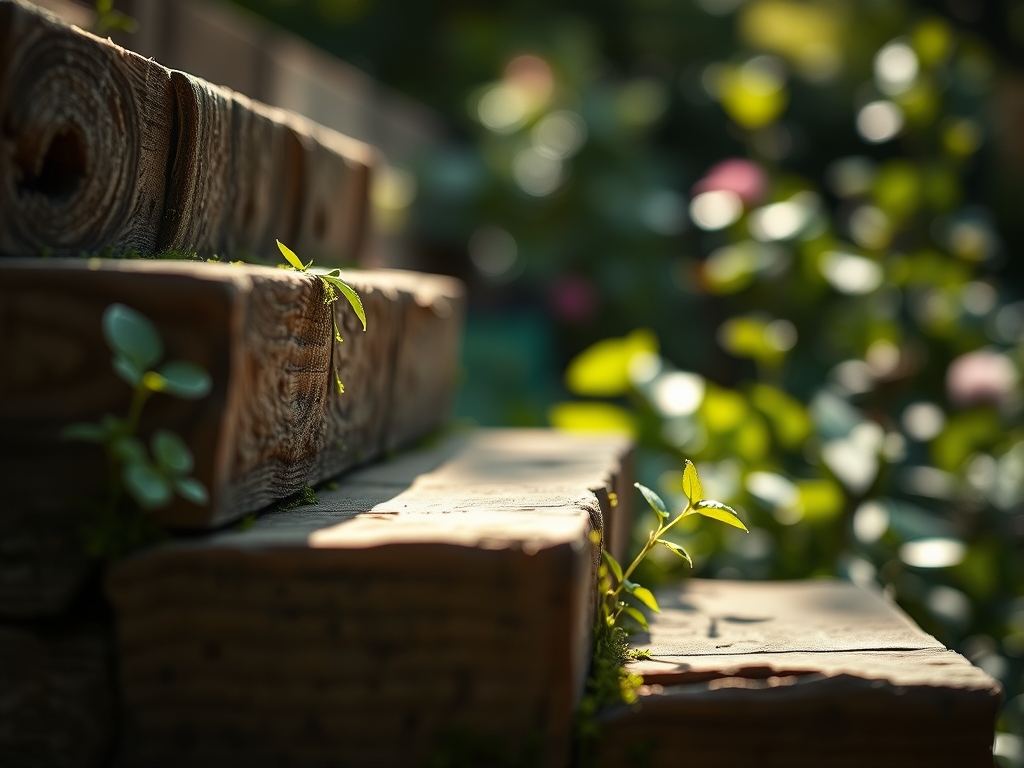
10 Safe Ways How to Build a Garden Staircase
The smell of damp, anaerobic clay gives way to the sharp, metallic scent of a sharpened spade as you break ground for a structural ascent. Success in learning how to build a garden staircase depends on your ability to manipulate slope stability while preserving the integrity of the surrounding rhizosphere. A poorly constructed step is more than a trip hazard; it is a vector for soil erosion and root compaction that can trigger localized senescence in nearby specimen plants. To build a staircase that lasts, you must account for the hydraulic conductivity of the soil and the turgor pressure of the vegetation anchoring the hillside. This process requires a precise understanding of geotechnical forces and botanical health.
Materials:

The substrate beneath your staircase must be a friable loam with a high Cation Exchange Capacity (CEC) to support the transition of peripheral plantings. Aim for a soil pH between 6.2 and 6.8 to ensure maximum nutrient bioavailability. Before setting your first riser, test the NPK ratios of the backfill; a balanced 10-10-10 NPK ratio is standard, though a higher phosphorus count (such as 5-10-5) encourages the rapid root establishment necessary for slope stabilization.
Physical materials should include pressure-treated timber rated for ground contact or natural stone with a high compressive strength. Avoid smooth, non-porous surfaces that increase runoff velocity. Use a base of 4 to 6 inches of compacted 3/4-minus crushed aggregate to facilitate drainage. This prevents the "heaving" caused by ice crystals during freeze-thaw cycles. The texture of the surrounding soil should be crumbly, not plastic, meaning it should shatter when squeezed rather than forming a solid ribbon.
Timing:
Construction must align with the biological clock of your local ecosystem. In Hardiness Zones 4 through 7, the ideal window opens in early autumn, at least six weeks before the first hard frost. This allows the soil to settle and any disturbed perennial roots to enter dormancy without the stress of extreme desiccation. In warmer Zones 8 through 10, late winter is preferable to avoid the high evapotranspiration rates of summer.
Monitoring the transition from vegetative to reproductive stages in your garden is vital. Do not begin heavy excavation when nearby primary plants are in their peak flowering or fruiting phase; the mechanical vibration and root pruning can trigger premature abscission. Wait for the period of reduced metabolic activity to ensure the plants can divert energy to root repair rather than foliage production.
Phases:

Sowing the Foundation
Excavate the slope in a series of "benches" or flat tiers. Each tread should have a slight 1-percent forward pitch to prevent water from pooling against the riser. This drainage prevents the development of fungal pathogens like Phytophthora in the root zones of adjacent plants. Ensure the base of the staircase is anchored at least 8 inches below the frost line to maintain structural equilibrium.
Pro-Tip: Incorporating mycorrhizal inoculants into the backfill promotes mycorrhizal symbiosis. This fungal network extends the reach of plant roots, increasing water uptake and stabilizing the soil particles around the new staircase.
Transplanting and Anchoring
When placing plants along the staircase margins, use the "hole-and-mound" technique. Dig a hole twice the width of the root ball to reduce bulk density and allow for easier lateral root penetration. Position the plant so the root flare is exactly at the soil surface. Backfill with the native soil mixed with 20 percent organic compost to maintain a high CEC.
Pro-Tip: When planting on a slope, use auxin suppression techniques like selective pruning of the uphill side. This encourages the plant to direct growth downward and outward, creating a biological "retaining wall" that secures the staircase.
Establishing the Slope
Once the hardscape is set, apply a 3-inch layer of organic mulch over all exposed soil. This regulates soil temperature and prevents the "capping" of the soil surface, which can lead to anaerobic conditions. Water the area deeply to a depth of 12 inches immediately after construction to eliminate air pockets in the rhizosphere.
Pro-Tip: Observe the phototropism of your new plantings. If plants lean excessively toward the light, they may develop weak, elongated stems. Proper spacing during the establishment phase ensures even light distribution and structural rigidity.
The Clinic:
Physiological disorders often manifest shortly after the soil disturbance required by how to build a garden staircase.
- Nitrogen Chlorosis: If older leaves turn a pale yellow while veins remain green, the soil likely has a nitrogen deficiency caused by the high carbon-to-nitrogen ratio of new mulch. Fix-It: Apply a liquid kelp or fish emulsion with a 5-1-1 NPK ratio for immediate uptake.
- Root Asphyxiation: If plants show wilting despite moist soil, the soil may be over-compacted from construction foot traffic. Fix-It: Use a garden fork to gently aerate the soil around the drip line, taking care not to sever primary lateral roots.
- Iron Deficiency: Interveinal chlorosis on new growth suggests a pH imbalance (often too alkaline near concrete steps). Fix-It: Apply chelated iron or elemental sulfur to lower the pH to the 6.5 range.
Maintenance:
Precision is the hallmark of a healthy garden. Use a soil moisture meter to ensure the root zones receive exactly 1.5 inches of water per week, delivered at the drip line rather than the crown. This prevents moisture-related rot. Use a hori-hori knife to remove deep-taproot weeds that compete for nutrients near the staircase foundation.
Pruning should be performed with bypass pruners to ensure clean, surgical cuts that callus over quickly. Monitor the staircase for "creep" or shifting after heavy rain events. If the soil pulls away from the risers, top-dress the area with a mix of coarse sand and compost to restore the soil-to-structure interface.
The Yield:
If your staircase is lined with fruiting species or herbs, harvest during the "cool" of the morning when cell turgor is at its peak. This ensures the highest concentration of essential oils and sugars. For woody herbs like rosemary or lavender, never remove more than one-third of the green growth at a time to avoid stalling the plant's metabolic processes. Use sharp snips to avoid tearing the vascular tissue; a clean cut preserves the plant's ability to transport water and minerals post-harvest.
FAQ:
What is the best material for a garden staircase?
Pressure-treated timber or natural stone are superior due to their durability and permeability. These materials allow for proper gas exchange in the soil and prevent the buildup of heat that can scorch nearby root systems.
How do I prevent my garden steps from sinking?
Excavate to a depth of 6 inches and install a compacted base of crushed aggregate. This creates a stable platform that distributes weight evenly and prevents the soil from compressing under the weight of the structure.
Can I build a staircase near large tree roots?
Avoid cutting any roots larger than 2 inches in diameter. If you encounter significant roots, bridge over them using a "floating" step design to prevent the onset of decay and potential structural failure of the tree.
How do I stop erosion around my new stairs?
Plant deep-rooted groundcovers or use "live staking" with willow or dogwood cuttings. These biological anchors work in tandem with the hardscape to hold the soil matrix together and reduce the velocity of surface runoff.