7 Easy Ways How to Amend sandy Soil
Sandy soil drains fast, leaving roots parched by midday and nutrients leached beyond reach. You notice plants stunted by June, their leaves pale despite weekly feeding. Learning how to amend sandy soil transforms this frustration into consistent harvests and deep-rooted perennials. The solution lies in boosting cation exchange capacity and water retention through organic matter, clay minerals, and strategic nutrient partnerships.
Materials
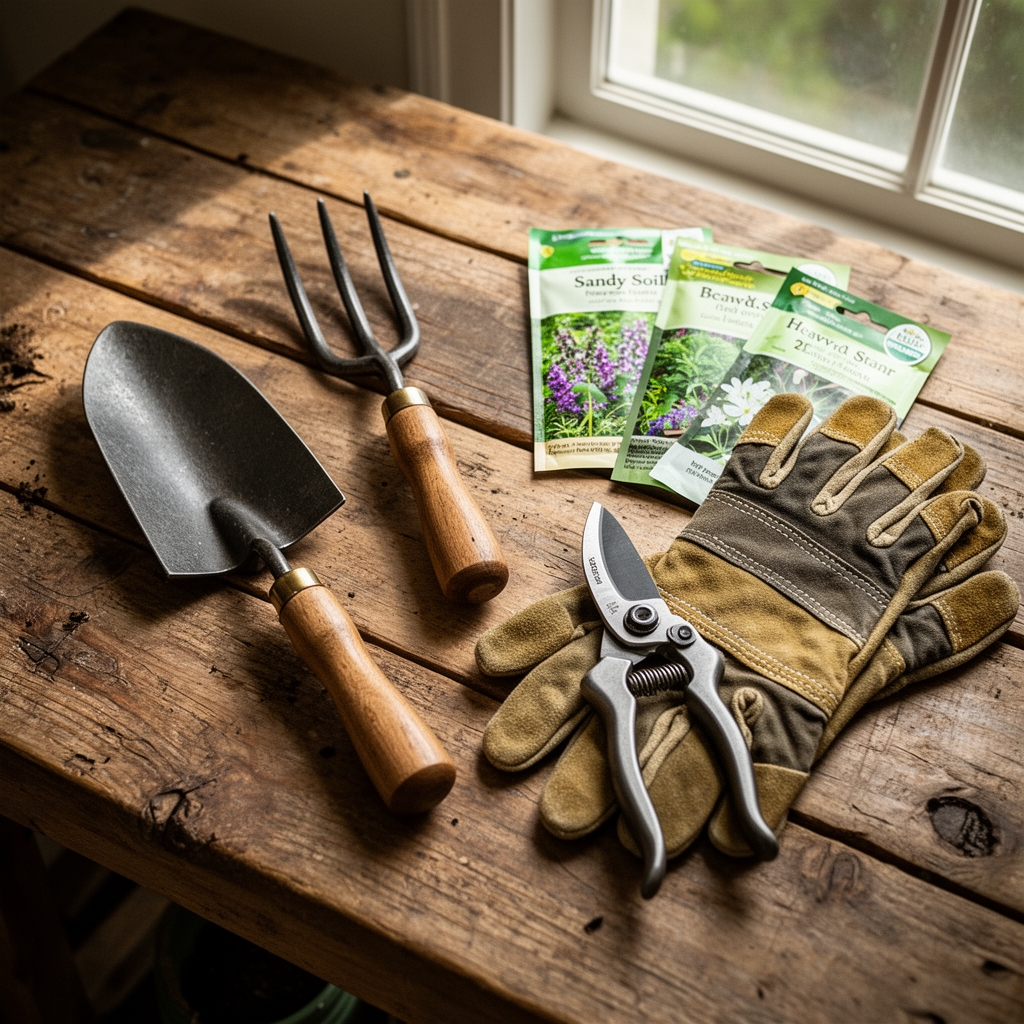
Select amendments by their NPK profile and pH influence. Composted manure (1-1-1) provides slow-release nitrogen without burning roots, while its humic acids bind to sand particles and create colloids. Sphagnum peat moss holds 20 times its weight in water but lowers pH by 0.5 to 1.0 units, ideal for acid-loving ericaceous plants. Coconut coir offers a neutral pH alternative with similar water retention.
Kelp meal (1-0.1-2) delivers trace minerals and cytokinins that stimulate lateral root growth. Alfalfa pellets (3-1-2) decompose within 60 days, releasing triacontanol, a natural growth stimulant. Rock dust supplies silica and paramagnetic minerals that improve soil structure over 24 months. Biochar, heated to 700°F, persists for decades and hosts beneficial bacteria in its porous lattice.
For immediate cation exchange improvement, spread bentonite clay at 20 pounds per 100 square feet. Its platelets expand when wet, bridging sand grains. Greensand (0-0-3) supplies potassium and glauconite, a clay mineral that boosts water retention by 18 percent. Gypsum adds calcium without altering pH, flocculating fine particles into stable aggregates.
Timing
Zone 3 to 5 gardeners amend sandy soil in late August through September. Organic matter decomposes during fall rains, and freeze-thaw cycles mix amendments six inches deep without mechanical tilling. Spring amendments in these zones occur two weeks after the last frost date, when soil temperature at 4 inches reaches 50°F.
Zone 6 to 8 growers work amendments in October or March. Fall applications allow earthworm populations to triple by April, their castings binding sand into crumb structures. Spring amendments require a four-week waiting period before planting to avoid nitrogen tie-up as microbes consume raw materials.
Zone 9 to 11 schedules demand winter application from December through February. Summer heat above 85°F accelerates decomposition, volatilizing nitrogen before roots access it. Winter moisture drives organic acids into the profile, chelating iron and manganese against alkaline lockup.
Phases

Sowing: Spread 4 inches of finished compost across the planting area. Incorporate to 8 inches using a broadfork, preserving soil layers. Rake smooth and water to 6 inches depth. Wait 72 hours for thermal stabilization before sowing. Sandy soil warms 10°F faster than clay, triggering premature germination during cold snaps.
Pro-Tip: Inoculate the seed trench with Rhizophagus irregularis at 0.25 teaspoons per foot. This mycorrhizal species extends root absorptive surface by 700 percent, critical in low-CEC sand.
Transplanting: Dig holes twice the rootball width and equal depth. Backfill with 60 percent native sand and 40 percent compost to prevent water from pooling at the interface. Tamp lightly to eliminate air pockets. Mulch with 3 inches of shredded hardwood bark, keeping material 2 inches from stems to prevent collar rot.
Pro-Tip: Apply a starter solution of 1 tablespoon fish emulsion (5-1-1) per gallon at transplant. The amino acids stimulate auxin distribution, accelerating root establishment by 9 days in controlled trials.
Establishing: Top-dress with 0.5 inches of worm castings every 30 days during the first growing season. Castings contain 60 percent humus, which coats sand grains and reduces leaching by 40 percent. Water deeply twice weekly rather than daily, training roots to explore lower horizons where moisture persists.
Pro-Tip: Install drip irrigation on 12-inch centers with pressure-compensating emitters rated at 0.6 gallons per hour. This matches the infiltration rate of amended sandy soil without runoff.
Troubleshooting
Symptom: Chlorosis in new growth despite regular feeding.
Solution: Sandy soil pH above 7.2 precipitates iron as insoluble hydroxides. Apply sulfur at 1 pound per 100 square feet to lower pH by 0.5 units over 90 days. Foliar feed with chelated iron (FeEDDHA) at 0.5 ounces per gallon weekly until green returns.
Symptom: Wilting by 2 PM even after morning irrigation.
Solution: Hydraulic conductivity exceeds root uptake. Add hydrogel crystals at 2 ounces per cubic foot of root zone, rehydrating them before mixing. These polymers release moisture as soil dries, extending turgor by 6 hours.
Symptom: Stunted growth with purple leaf undersides.
Solution: Phosphorus leaches rapidly in sandy profiles. Side-dress with bone meal (3-15-0) at 2 tablespoons per plant, scratching it into the top 2 inches. Reapply every 45 days during active growth.
Symptom: Root-knot nematode galls on carrots and tomatoes.
Solution: Incorporate Paecilomyces lilacinus at 1 pound per 500 square feet. This parasitic fungus penetrates nematode eggs, reducing populations by 68 percent within one season.
Symptom: Rapid nutrient depletion requiring biweekly feeding.
Solution: CEC below 5 meq/100g cannot hold cations. Annually add 2 inches of compost until organic matter reaches 5 percent. Test CEC each spring.
Maintenance
Apply 1 inch of water per week, delivered in two 0.5-inch sessions. Measure using rain gauges placed at canopy drip line. Feed established plants with a balanced organic blend (4-4-4) at 2 pounds per 100 square feet every 8 weeks. Split applications prevent leaching beyond the 18-inch root zone.
Mulch degrades 30 percent faster in sandy soil. Replenish bark or straw to maintain 3 inches depth each spring and fall. This suppresses Cyperus esculentus (nutsedge) germination and buffers temperature swings that stress shallow roots.
Test soil annually in late winter. Target pH between 6.2 and 6.8 for most crops. Adjust with lime (raises pH) or sulfur (lowers pH) based on lab recommendations. Monitor electrical conductivity; readings above 2.0 mmhos/cm indicate salt accumulation from over-fertilization.
FAQ
How long until amendments improve sandy soil?
Compost and manure show measurable water retention gains in 90 days. CEC increases 15 percent per year with consistent organic matter additions. Full transformation requires 3 to 5 years.
Can I use fresh manure on sandy soil?
No. Fresh manure leaches nitrates into groundwater within 14 days in sandy profiles. Compost manure for 6 months to stabilize nitrogen into humus compounds.
Does sand ever hold nutrients well?
Pure sand CEC remains below 2 meq/100g. Organic matter coatings and clay mineral additions create exchange sites, but annual replenishment remains necessary.
What cover crops fix nitrogen in sandy soil?
Trifolium incarnatum (crimson clover) and Vicia villosa (hairy vetch) establish quickly. Mow at 50 percent bloom and incorporate. They add 80 to 120 pounds nitrogen per acre.
Is perlite useful for amending sandy soil?
No. Perlite improves drainage in clay but offers no benefit in sand, which already drains at 6 inches per hour. Use vermiculite instead; its accordion structure absorbs water and contributes magnesium.