10 Basic Steps to Store Potato Tubers
Successful potato storage hinges on precise environmental control and careful handling from harvest through dormancy. The steps to store potato tubers begin the moment skin sets on mature plants, when vines yellow and die back naturally. A well-cured tuber stored at 40°F with 95% humidity can remain viable for eight months, retaining both culinary quality and seed viability for next season's crop.
Materials
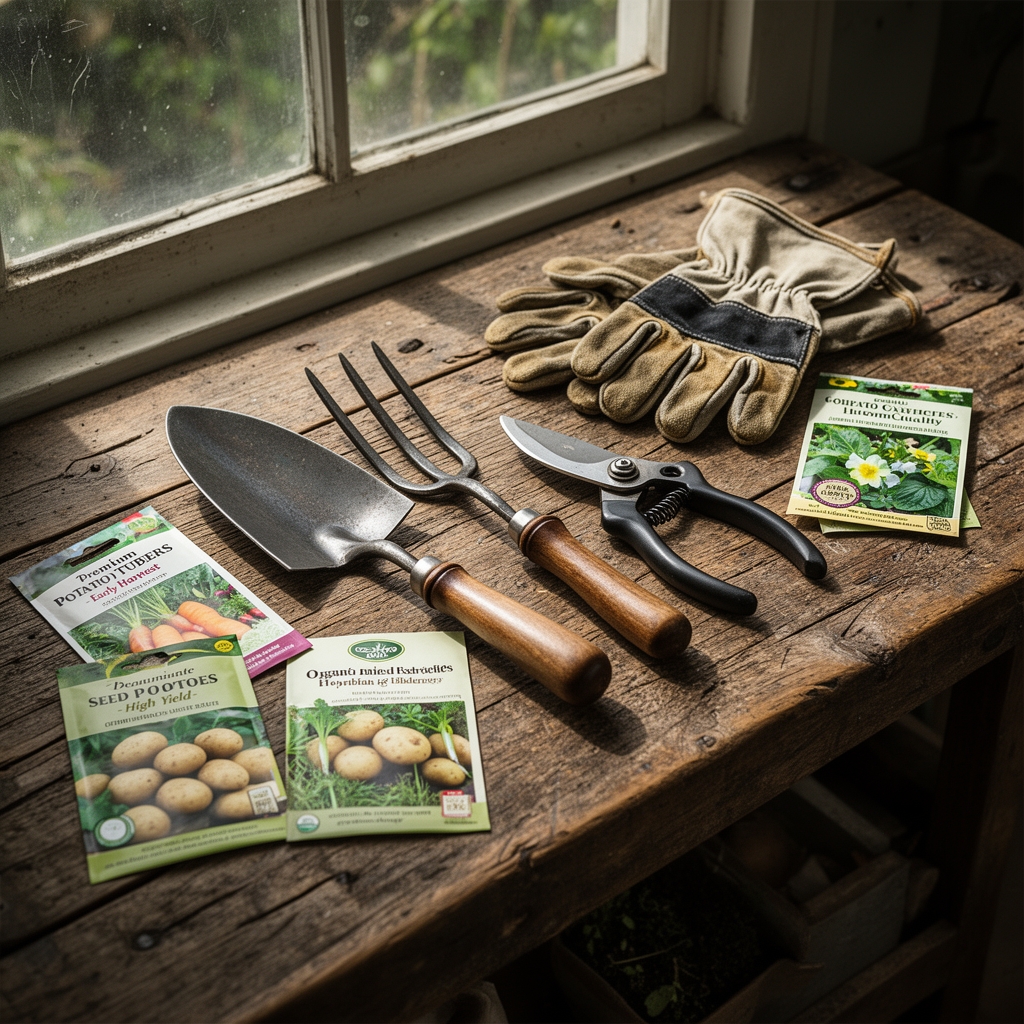
Proper storage requires specific tools and environmental amendments. Use wooden slatted crates or perforated plastic bins to ensure air circulation around each tuber. Avoid galvanized metal containers, which can accelerate moisture accumulation and bacterial soft rot.
For curing spaces, maintain substrate pH between 5.0 and 5.5. Apply agricultural lime only if soil tests reveal pH below 4.8, as excess alkalinity promotes common scab (Streptomyces scabies). Dusting material should consist of diatomaceous earth or sulfur powder, not talc.
Temperature monitoring equipment must include min-max thermometers and hygrometers with ±2% accuracy. Install these devices at tuber level, not ceiling height where readings skew warmer.
Fungicide dips containing fludioxonil at 0.5% concentration reduce storage rots without affecting sprouting. Apply NPK fertilizer at 4-4-4 ratios six weeks before harvest to harden skins and boost suberin deposition in periderm layers.
Timing
Harvest timing governs storage success more than any other factor. In Zones 3-5, dig tubers between late August and mid-September, at least two weeks after vine kill. Zones 6-7 extend harvest windows through early October. Waiting allows skin cells to lignify and develop cation exchange capacity that resists bacterial infiltration.
Monitor soil temperatures at 4-inch depth. Dig when readings hold steady at 50-60°F for five consecutive days. Temperatures below 45°F trigger cold-induced sweetening, converting starches to reducing sugars that cause dark fry colors and bitter flavors.
Frost-date calculations matter less than physiological maturity. A light frost (32-28°F) kills vines without damaging underground tubers insulated by soil. Hard freezes below 28°F penetrate 2-3 inches and cause ice crystal rupture in epidermal cells.
Phases
Curing Phase
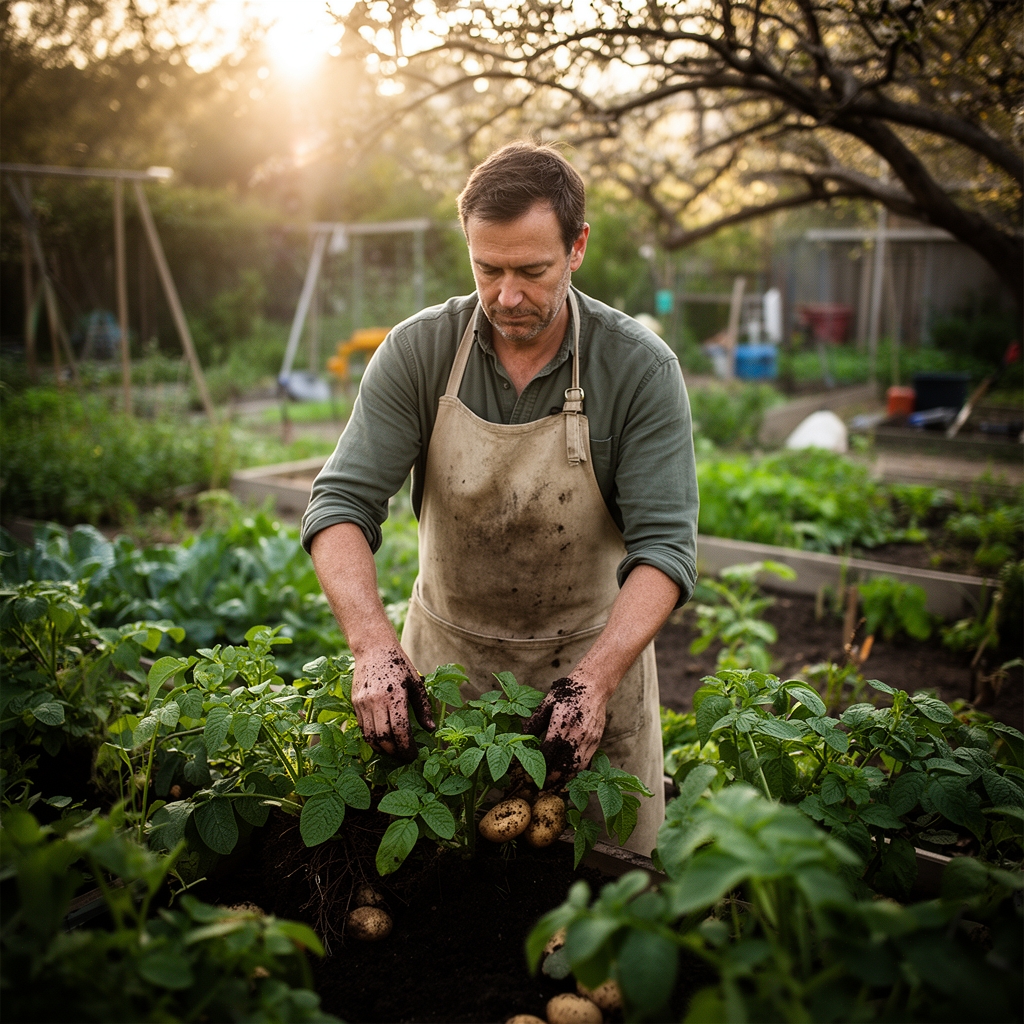
Hold freshly dug tubers at 50-60°F with 85-95% relative humidity for 10-14 days. This wound-healing period activates suberin biosynthesis and lignin deposition across cuts and bruises. Ventilate curing rooms with 10-15 air changes per hour to remove respiratory ethylene and carbon dioxide.
Do not wash tubers before curing. Soil particles protect skin from abrasion and desiccation. Brush away only large clods that trap moisture against tuber surfaces.
Pro-Tip: Apply Trichoderma harzianum spores at 1×10^6 CFU per gallon of water as a post-harvest dip. This beneficial fungus colonizes wound sites and outcompetes Fusarium and Phytophthora pathogens through competitive exclusion.
Cooling Phase
Lower temperatures 1°F per day until reaching final storage temperature. Rapid cooling shocks tubers and disrupts auxin distribution, leading to irregular sprouting patterns. Most cultivars stabilize at 38-40°F for table stock or 42-45°F for seed purposes.
Maintain darkness throughout cooling. Light exposure above 5 foot-candles triggers chlorophyll synthesis and glycoalkaloid production, creating green, bitter, toxic tissue.
Pro-Tip: Install sulfur vaporizers at 0.25 pounds per 1,000 cubic feet to suppress bacterial soft rot without leaving residues on tuber surfaces.
Dormancy Phase
Storage duration varies by cultivar. Early-maturing varieties like 'Yukon Gold' hold dormancy for 90-120 days. Late-season types such as 'Russet Burbank' remain dormant 150-180 days. Apply chlorpropham (CIPC) at 15-30 ppm as a sprout inhibitor only after tubers complete natural dormancy, typically 8-12 weeks post-harvest.
Inspect bins weekly for moisture condensation, soft spots, or sprouting. Remove damaged tubers immediately to prevent disease spread through mycorrhizal networks and volatilized ethylene signals.
Pro-Tip: Position bins 4 inches from walls and stack no higher than 6 feet to ensure gravitational air flow through the pile's core.
Troubleshooting
Symptom: Soft, water-soaked lesions with foul odor.
Solution: Bacterial soft rot from Erwinia carotovora. Increase ventilation to 20 air changes hourly. Lower humidity to 80%. Remove affected tubers and those within 6-inch radius.
Symptom: Dry, sunken black spots on skin.
Solution: Silver scurf (Helminthosporium solani). Non-pathogenic but cosmetically damaging. Reduce humidity to 85%. Apply thiabendazole fungicide at labeled rates for seed stock.
Symptom: Internal brown rust-colored rings.
Solution: Verticillium wilt residue from growing season. No cure exists post-harvest. Discard affected tubers. Rotate future plantings to non-solanaceous crops for three years.
Symptom: Sweet flavor and dark frying color.
Solution: Cold-induced sweetening from sub-38°F storage. Recondition tubers at 65-70°F for 7-10 days to reconvert sugars to starch through respiratory pathways.
Symptom: Hollow centers or brown cores.
Solution: Physiological disorder from rapid growth or excess nitrogen. Occurs pre-harvest. Use affected tubers first, as condition worsens in storage.
Maintenance
Check storage conditions every three days minimum. Temperature fluctuations exceeding ±3°F trigger condensation cycles that promote fungal growth. Maintain relative humidity at 95% ±3% using humidifiers or wet burlap screens.
Apply 0.5 inches of water weekly to dirt floors in root cellars to sustain ambient moisture. Monitor with calibrated hygrometers placed at multiple heights within the storage volume.
Rotate air continuously with fans sized at 1 CFM per 50 pounds of stored tubers. Position fans to create horizontal flow patterns, not vertical drafts that concentrate cold air at floor level.
Remove sprouted tubers when sprouts exceed 0.25 inches. Sprouting consumes 5-10% of total tuber dry weight monthly, degrading both texture and nutritional value.
FAQ
How long do potatoes last in proper storage?
Table stock holds 4-8 months at 38-40°F. Seed potatoes remain viable 8-10 months at 42-45°F with maintained dormancy.
Can you store potatoes with other vegetables?
Never store with onions or apples. Both release ethylene gas and volatile sulfur compounds that accelerate sprouting and off-flavor development.
What causes potatoes to turn green?
Chlorophyll production from light exposure above 5 foot-candles. Accompanies solanine accumulation at 5-20 mg per 100g, creating potential toxicity.
Should potatoes be washed before storage?
No. Washing removes protective soil layer and introduces free moisture that enables bacterial soft rot. Clean only before final use.
Why do stored potatoes taste sweet?
Temperatures below 38°F convert starch to glucose and fructose through amylase enzyme activity. Reconditioning at 65°F for one week reverses this process through respiration.