8 Best Storage Bags for Sprayers
The scent of wet humus and the snap of a leaf with high turgor pressure define the professional workspace. Precision in the garden requires more than just high quality seeds; it demands the maintenance of hydraulic equipment and chemical applicators. Residual moisture and UV exposure degrade gaskets and pump seals over time. Investing in the best storage bags for sprayers ensures that your pressurized systems remain airtight and free from the particulate contamination that clogs nozzles. A sprayer stored in a porous or substandard container risks seal desiccation and chemical crystallization. Professional grade storage solutions protect the integrity of the pump assembly and the longevity of the wand. We treat these tools as extensions of the hand. Without proper containment, the technical efficiency of a 4 gallon backpack unit or a handheld compression sprayer drops significantly after a single season of neglect.
Materials:

Successful cultivation begins in the rhizosphere. The ideal substrate is a **friable loam** with a Cation Exchange Capacity (CEC) exceeding **15 meq/100g**. This ensures the soil can hold and release essential cations like Calcium (Ca2+) and Magnesium (Mg2+). For vegetative growth, maintain a soil pH between **6.2 and 6.8** to optimize nutrient bioavailability.
When preparing the site, incorporate organic matter to achieve a bulk density of approximately 1.1 to 1.3 g/cm3. Use a base NPK ratio of 10-10-10 for general establishment; however, transition to a 5-10-15 ratio during the reproductive phase to support root development and fruit set without overstimulating nitrogen-heavy foliage. The physical texture should allow for rapid infiltration while retaining enough moisture to prevent permanent wilting point during high evapotranspiration periods.
Timing:
Hardiness Zones 4 through 8 require strict adherence to the local frost-free date. For most temperate species, the biological clock initiates when soil temperatures consistently reach 55 degrees Fahrenheit. The transition from the vegetative stage to the reproductive stage is governed by the photoperiod and thermal heat units, often measured as Growing Degree Days (GDD).
Monitor the vernalization requirements of your specific cultivars. If the plant is sensitive to day length, the shift in auxin production will trigger flowering as nights lengthen. In Zone 7, the window for transplanting typically opens in mid April, provided the diurnal temperature fluctuations do not drop below 40 degrees Fahrenheit. Failure to respect these windows results in stunted growth and a significant reduction in total biomass.
Phases:
Sowing
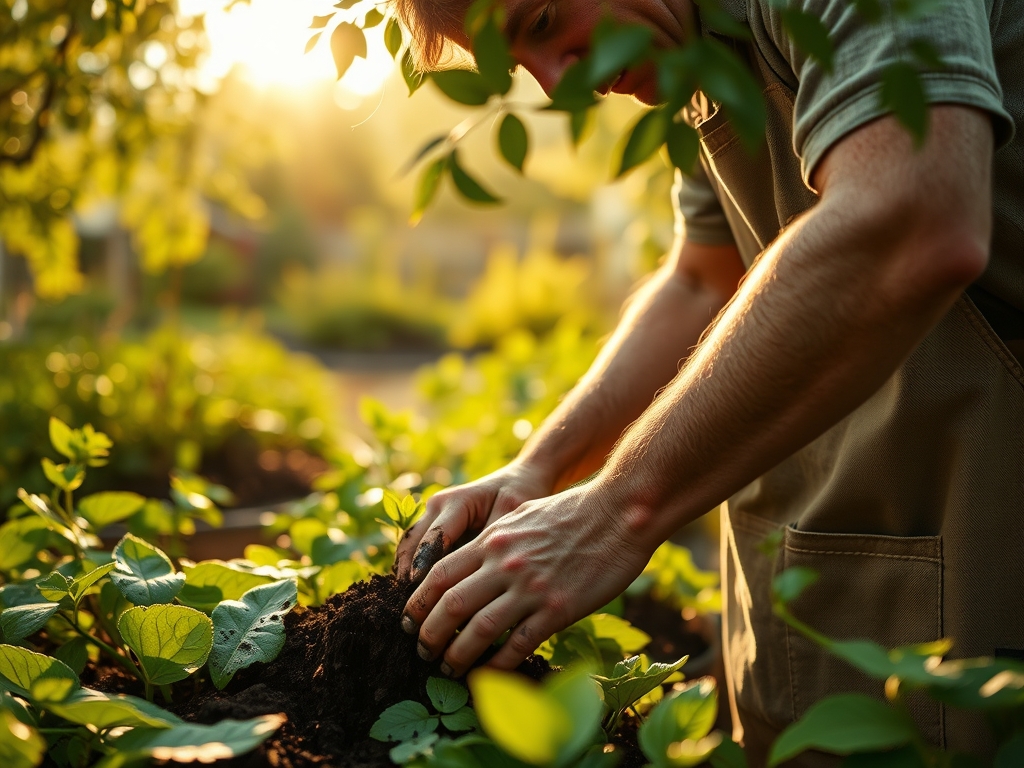
Place seeds at a depth exactly two times their diameter to ensure adequate soil contact and moisture uptake. Maintain a consistent temperature of 70 degrees Fahrenheit for optimal germination rates.
Pro-Tip: Proper seed depth prevents premature exposure to light, which can inhibit germination in certain species by triggering phytochrome responses that stall the metabolic engine of the embryo.
Transplanting
When moving seedlings, ensure the root ball is thoroughly saturated. Dig a hole twice the width of the container to allow for rapid lateral root expansion into the surrounding soil matrix.
Pro-Tip: Inoculate the planting hole with endomycorrhizal fungi. This symbiotic relationship increases the effective surface area of the root system by up to 1,000 percent, significantly enhancing phosphorus uptake through fungal hyphae.
Establishing
During the first 14 to 21 days, the plant focuses on root architecture rather than vertical height. Avoid high nitrogen fertilizers during this window to prevent "lanky" growth that lacks structural integrity.
Pro-Tip: Suppress apical dominance by pinching back the terminal bud if lateral branching is desired. This redirects auxins to the axillary buds, promoting a bushier growth habit and increasing the number of potential fruiting sites.
The Clinic:
Physiological disorders often mimic pathogen attacks but are rooted in environmental stress or nutrient imbalances.
- Symptom: Interveinal chlorosis on young leaves.
Solution: This indicates an Iron (Fe) deficiency, often caused by a pH above 7.2. Lower the pH using elemental sulfur to increase solubility. - Symptom: Blossom end rot in Solanaceous crops.
Solution: This is a Calcium transport issue. Ensure consistent soil moisture to facilitate the transpiration stream; Calcium cannot move through the plant without steady water flow. - Symptom: Purpling of older foliage.
Solution: This is a classic Phosphorus (P) deficiency. Apply a water soluble 0-20-0 fertilizer to the root zone to correct the metabolic lag. - Fix-It (Nitrogen Chlorosis): General yellowing of the entire plant starts at the base. Apply a quick release high-N fertilizer (such as blood meal or urea) and monitor for a return of deep green color within 7 days.
Maintenance:
Precision maintenance prevents systemic failure. Deliver 1.5 inches of water per week at the drip line rather than the stem base to encourage expansive root growth. Use a soil moisture meter to verify that the root zone at a 6 inch depth remains between 60 and 80 percent of field capacity.
For pruning, utilize sharp bypass pruners to make clean cuts at a 45 degree angle just above a node; this prevents water pooling and subsequent fungal infection. Use a hori-hori knife for weeding to ensure the entire taproot is removed without disrupting the surrounding soil structure. Sanitize all tools with a 10 percent bleach solution between plants to prevent the mechanical transmission of viral pathogens.
The Yield:
Harvesting is a matter of cellular maturity. For leafy greens, harvest before the heat of the day to ensure maximum turgor pressure and crispness. For fruiting bodies, look for the "abscission layer" to form at the stem, indicating the plant has stopped pumping sugars into the fruit.
Post-harvest handling is critical for maintaining "day-one" freshness. Immediately submerge harvested produce in 40 degree Fahrenheit water to remove field heat. This process, known as hydro-cooling, slows down the respiration rate and prevents the rapid depletion of stored carbohydrates. Store in a high humidity environment (90 to 95 percent) to prevent desiccation and senescence.
FAQ:
How do I choose the best storage bags for sprayers?
Select bags made of heavy duty 600D polyester or UV resistant PVC. Ensure the bag features reinforced stitching and a waterproof liner to contain chemical residues and protect the internal pump seals from environmental degradation.
Why is soil pH important for sprayer-applied nutrients?
Soil pH dictates the ionic form of nutrients. If the pH is off, even the best sprayer application will fail because the minerals become "locked" in the soil and remain unavailable for root uptake.
What is the best way to clean a sprayer before storage?
Triple rinse the tank with clean water and run a neutralizing agent through the nozzle. Dry all components completely before placing them into a dedicated storage bag to prevent mold and gasket rot.
How often should I check my soil moisture?
Check soil moisture twice weekly using a digital meter. In high heat, check daily. Aim for a reading that reflects "field capacity," where the soil is moist but air pores remain open for root respiration.