10 Basic Steps to Fall Garden Prep
The first cold snap arrives before most gardeners notice. Leaves curl inward, soil temperature drops below 60°F, and nutrient uptake slows to half its summer rate. These steps to fall garden prep transform a depleted plot into a biologically active system that overwinters stronger than it began. Organic matter incorporation, strategic cover cropping, and precise fertilizer ratios determine whether spring planting begins in amended soil or compacted clay.
Materials
Soil Amendments (Balanced pH 6.0-7.0)
Aged compost at 3 cubic yards per 1,000 square feet supplies slow-release nitrogen and increases cation exchange capacity by 20-30%. Well-composted manure registers at 1-1-1 NPK and raises organic matter content by 2-4% annually. Canadian sphagnum peat moss lowers pH by 0.5-1.0 units per 2-inch layer when tilled to 6 inches deep.
Fertilizers (Organic Meal Blends)
Alfalfa meal at 3-1-2 delivers triacontanol, a natural growth stimulant that accelerates root cell division. Kelp meal at 1-0.1-2 plus 60 trace minerals improves cold tolerance through enhanced auxin distribution. Bone meal at 4-12-0 releases phosphorus over 4-6 months, supporting root establishment before winter dormancy.
Cover Crop Seed
Crimson clover fixes 70-150 pounds of nitrogen per acre and tolerates temperatures to 10°F. Winter rye (Secale cereale) produces 3-5 tons of biomass per acre and suppresses weeds through allelopathic root exudates. Hairy vetch fixes 80-120 pounds of nitrogen per acre and dies back naturally in late spring.
Tools and Microbial Inoculants
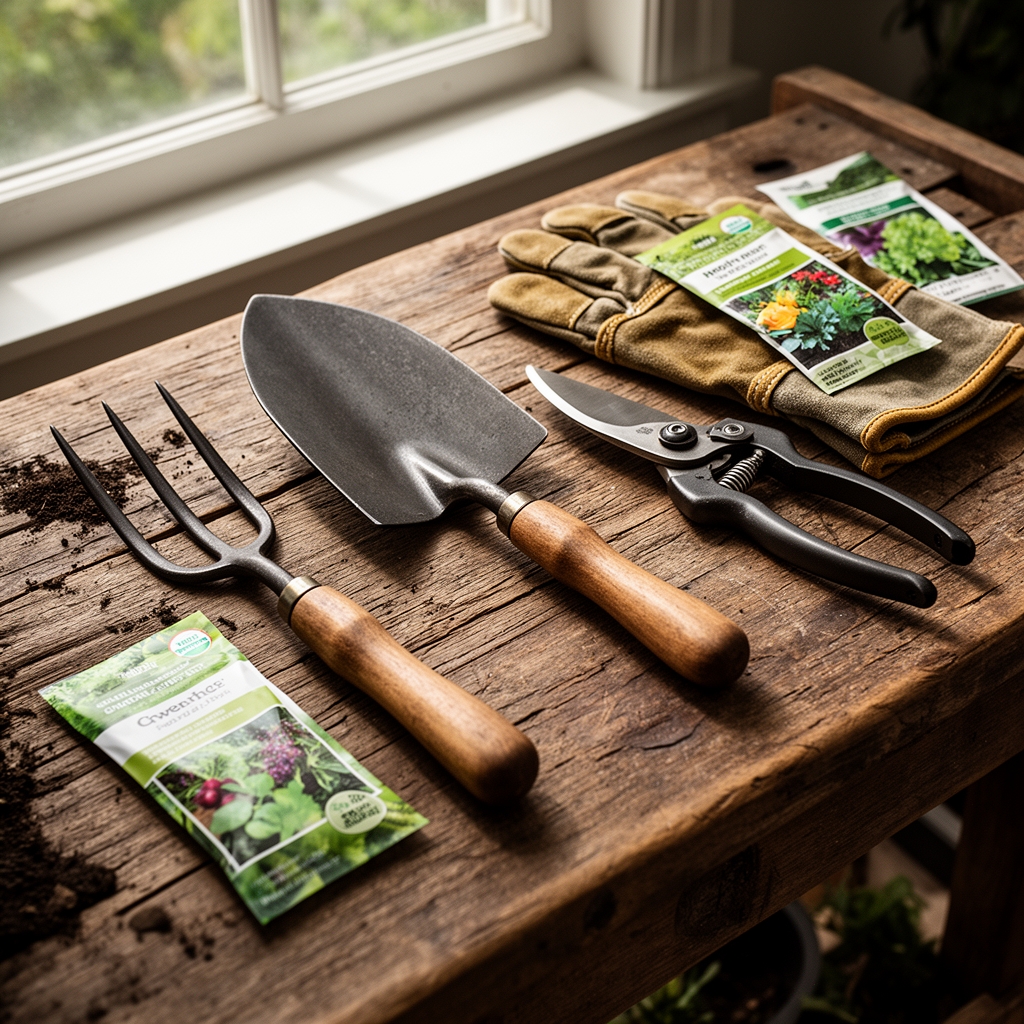
Broadfork for non-inversion tillage to 12 inches without disrupting fungal networks. Mycorrhizal fungi inoculant (Rhizophagus intraradices) at 0.2 ounces per transplant increases phosphorus uptake by 40-60%. Soil pH meter calibrated to 0.1-unit accuracy.
Timing
Hardiness Zones 3-5
Begin steps to fall garden prep 8-10 weeks before first frost (typically August 1-15). Soil temperature must remain above 50°F for cover crop germination. Transplant perennials by September 15 to allow 6 weeks of root growth before ground freezes.
Hardiness Zones 6-7
Start preparation 6-8 weeks before first frost (September 1-15). Direct-sow brassicas by September 20 for November harvest. Apply compost by October 1 to allow microbial colonization before soil temperature drops below 45°F.
Hardiness Zones 8-10
Initiate tasks 4-6 weeks before average low temperatures reach 40°F (October 1-15). Plant cool-season crops through November 1. Apply granular fertilizers by mid-October to prevent leaching during winter rains.
Phases
Sowing (Weeks 1-2)
Remove spent summer crops and root systems to prevent disease carryover. Test soil pH and adjust with dolomitic limestone (raises pH 0.5 units per 5 pounds per 100 square feet) or elemental sulfur (lowers pH 0.5 units per 1 pound per 100 square feet). Broadcast cover crop seed at 2-3 pounds per 1,000 square feet and rake to 1/4-inch depth.
Pro-Tip: Mix 10% radish seed (Raphanus sativus var. longipinnatus) with cover crops to create root channels that break up compaction layers at 12-18 inches deep.
Transplanting (Weeks 3-4)
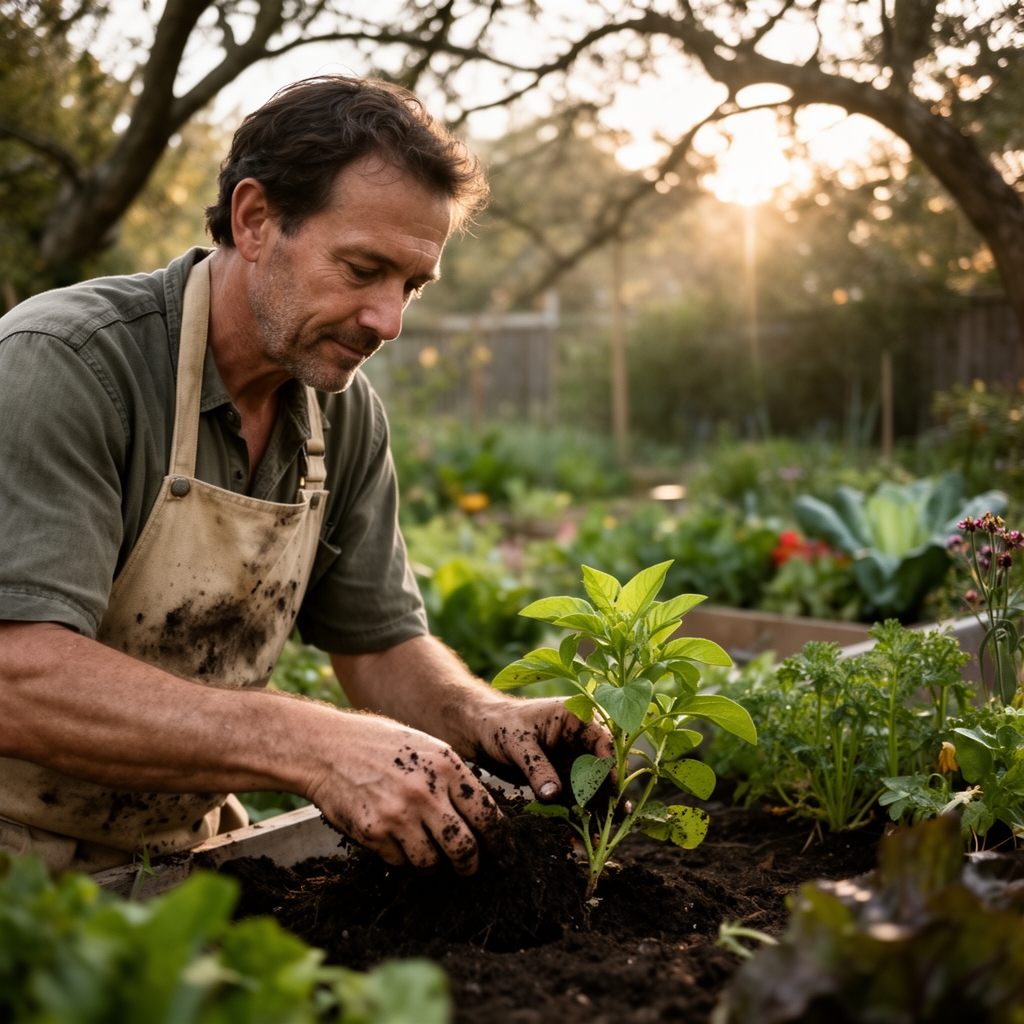
Dig planting holes twice the root ball width and equal depth. Mix native soil 50/50 with aged compost and add 1 tablespoon mycorrhizal inoculant per cubic foot. Position root flare at grade level to prevent stem rot. Water transplants with 2 gallons per plant to eliminate air pockets.
Pro-Tip: Prune woody perennials at 45-degree angles 1/4 inch above outward-facing buds to direct spring growth horizontally and prevent central die-back.
Establishing (Weeks 5-8)
Apply 2-4 inches of shredded hardwood mulch around transplants, leaving 3-inch clearance at stems to prevent crown rot. Side-dress established plants with 4-4-4 organic fertilizer at 2 pounds per 100 square feet. Water deeply once per week to 8-inch depth rather than daily surface irrigation.
Pro-Tip: Spray foliar kelp solution (1 tablespoon per gallon) at 2-week intervals until frost to increase abscisic acid levels and cold-harden cell membranes.
Troubleshooting
Symptom: Yellowing lower leaves with green veins (chlorosis).
Solution: Apply chelated iron at 1 tablespoon per gallon as soil drench. Indicates pH above 7.5 or manganese deficiency in alkaline soils.
Symptom: Stunted growth with purple leaf undersides.
Solution: Broadcast rock phosphate at 10 pounds per 100 square feet. Phosphorus immobilizes in cold soil below 55°F.
Symptom: Wilting despite adequate moisture.
Solution: Inspect for root-knot nematodes (Meloidogyne spp.). Solarize soil with clear plastic for 4-6 weeks when temperature exceeds 80°F or rotate to non-host crops.
Symptom: White powdery coating on leaf surfaces.
Solution: Apply 1% sodium bicarbonate solution (1 tablespoon per gallon) weekly. Powdery mildew (Erysiphe cichoracearum) thrives in 60-80°F temperatures with low humidity.
Symptom: Holes in leaves with slime trails.
Solution: Hand-pick slugs at dawn or apply iron phosphate bait at 1 pound per 1,000 square feet. Reduce mulch depth to under 2 inches.
Maintenance
Water established beds to 1 inch per week measured with rain gauge. Apply liquid fish emulsion at 2 tablespoons per gallon every 3 weeks until soil temperature drops below 50°F. Monitor soil moisture at 4-inch depth with tensiometer; irrigate when readings exceed 60 centibars. Inspect transplants weekly for aphids (Aphididae family) and spray insecticidal soap at 5 tablespoons per gallon at first detection. Cut cover crops at soil line when biomass reaches 8-12 inches tall and allow residue to decompose in place for 2 weeks before planting.
FAQ
When should I stop fertilizing before winter?
Cease nitrogen applications 6 weeks before first frost to prevent tender growth vulnerable to freeze damage. Phosphorus and potassium amendments continue through October.
Can I till in cover crops immediately?
Wait until plants flower for maximum biomass (typically 10-14 weeks after germination). Mow, then till to 4-inch depth. Allow 3 weeks decomposition before planting.
How deep should fall compost applications be?
Spread 2-3 inches across surface without tilling. Earthworm activity incorporates organic matter naturally over winter without disrupting soil structure.
What soil temperature triggers dormancy?
Root growth ceases below 40°F for most perennials. Metabolic activity drops to 10% of summer rates at 32°F soil temperature.
Should I mulch before or after first frost?
Apply after ground freezes to prevent rodent nesting. Premature mulching insulates soil warmth and delays dormancy.