7 Easy Ways How to Spring Cleanup Garden
The late-winter thaw exposes matted leaves, broken stems, and compacted soil crusted with salt residue. This annual reveal signals the moment to execute how to spring cleanup garden tasks that determine whether your beds will produce prolifically or languish under pathogen pressure and nutrient lockout. A methodical approach, rooted in soil science and plant physiology, transforms debris-choked plots into environments primed for rapid root establishment and optimal auxin distribution.
Materials
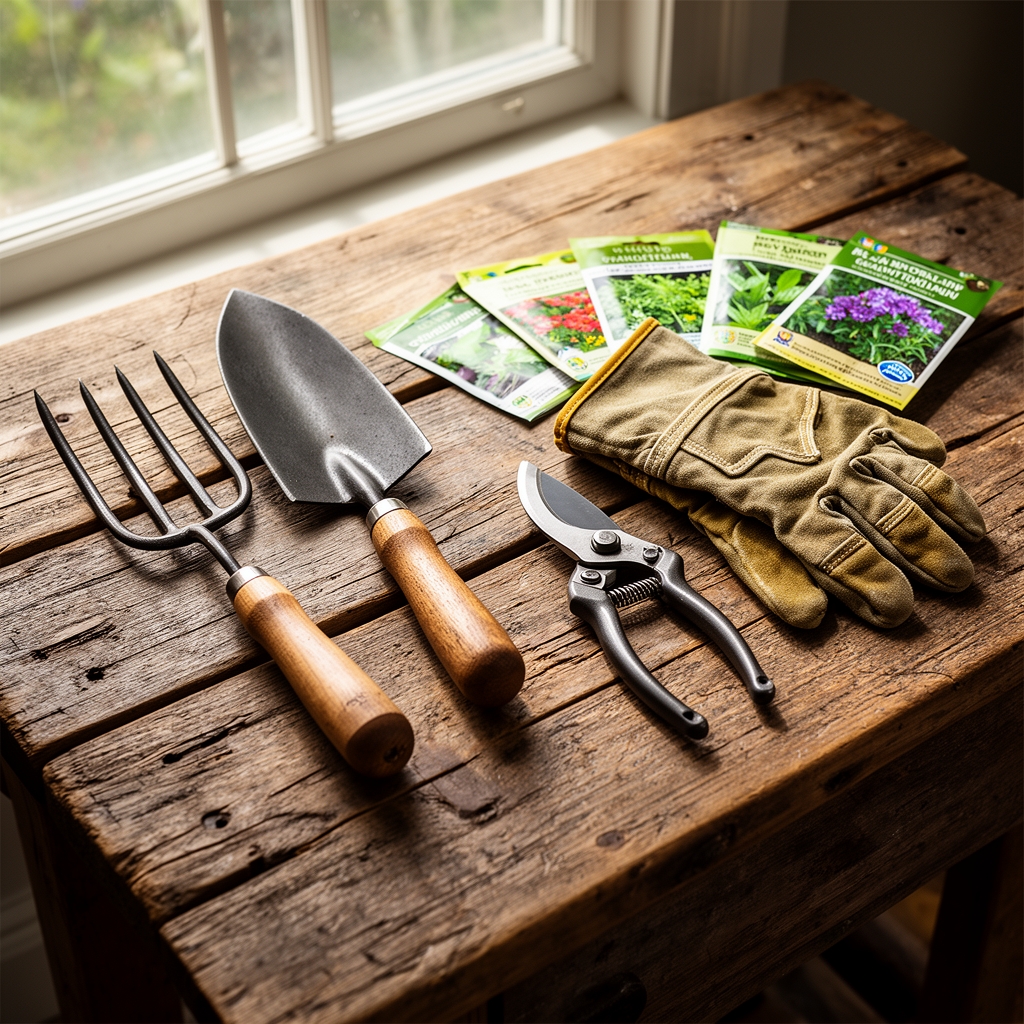
Assemble tools and amendments before soil temperatures reach 50°F at four-inch depth. You will need bypass pruners sterilized in 10% bleach solution, a soil thermometer accurate to ±1°F, and a broadfork to aerate without inverting horizons. For amendments, source a 4-4-4 organic meal (feather meal, bone meal, kelp) to supply balanced NPK while improving cation exchange capacity. Add sulfur at 1 lb per 100 square feet if your pH exceeds 7.2, or dolomitic lime at the same rate if pH falls below 6.0. Mycorrhizal fungi inoculant containing Rhizophagus irregularis accelerates phosphorus uptake in transplants. A wheelbarrow, leaf rake, and tarps complete the kit.
Stock compost screened to 0.5-inch particle size, aged a minimum of six months to ensure thermophilic decomposition has neutralized pathogens. Avoid fresh manure; its high ammonia content burns feeder roots and skews nitrogen availability.
Timing
Align cleanup with USDA Hardiness Zone frost dates and soil workability windows. In Zone 5, begin when daytime air temperatures stabilize above 45°F for five consecutive days, typically mid-March to early April. Zone 6 gardeners can start two weeks earlier; Zone 7 by late February. Soil is workable when a handful squeezed into a ball crumbles apart rather than holding a muddy shape. Working saturated soil destroys aggregates and collapses pore space, reducing oxygen diffusion to roots by up to 40%.
Northern zones (3-4) should delay cleanup until soil thaws to six inches and snow melt drains completely, often late April. Southern zones (8-9) face different constraints: spring cleanup occurs in January or February before heat accelerates pest lifecycles.
Phases
Phase One: Debris Removal and Assessment
Strip all dead annual foliage, cutting perennials to two inches above the crown. Leave ornamental grass plumes until new growth emerges at the base, then shear to four inches. Rake thatch from lawn edges where it harbors vole runways and fungal spores. Inspect for overwintering egg masses of squash vine borer (Melittia cucurbitae) on cucurbit stems and hand-crush any found.

Pro-Tip: Examine woody stems at a 45-degree angle under magnification. Brown pith indicates winter dieback; prune to green tissue, cutting 0.25 inches above an outward-facing bud to direct growth away from the plant center.
Phase Two: Soil Aeration and Amendment
Insert the broadfork every eight inches along bed length, rocking back to lift and fracture compacted layers without mixing horizons. This preserves beneficial soil stratification while increasing air-filled porosity by 15-20%. Broadcast the 4-4-4 organic meal at 2 lbs per 100 square feet, then incorporate to three-inch depth with a cultivator.
Apply compost at 1-inch depth across all beds. Its humic acids chelate micronutrients, making iron, manganese, and zinc plant-available even in alkaline soils.
Pro-Tip: Inoculate transplant root balls by dusting with 0.25 teaspoon mycorrhizal powder per plant. Direct soil-to-root contact establishes symbiosis within 72 hours, extending phosphorus foraging range by 100-fold.
Phase Three: Mulch and Edge Definition
Reestablish bed edges with a half-moon edger, cutting a 90-degree trench three inches deep. Sharp boundaries prevent turf encroachment and simplify mowing. Spread shredded hardwood bark mulch to two-inch depth, stopping three inches from plant crowns to prevent crown rot. Mulch moderates soil temperature swings, suppresses annual weed germination by blocking light, and reduces evapotranspiration by 30%.
Pro-Tip: In clayey soils with slow drainage, substitute pea gravel mulch around Mediterranean herbs (rosemary, lavender). Gravel reflects heat, accelerates soil drying, and prevents root asphyxiation.
Troubleshooting
Symptom: Perennial crowns soft and discolored at soil line.
Solution: Crown rot from Sclerotium species. Excise affected tissue to healthy white growth, improve drainage with sand incorporation at 20% by volume, and space plants six inches farther apart.
Symptom: Leaf tips brown and crispy on early transplants.
Solution: Salt burn from road de-icer runoff. Leach soil with two inches of water applied slowly over four hours, then topdress with gypsum at 5 lbs per 100 square feet to displace sodium ions.
Symptom: Stunted growth and purple-tinged leaves in brassicas.
Solution: Phosphorus immobilization in cold soil below 55°F. Apply liquid kelp foliar spray at 1 tablespoon per gallon weekly until soil warms, enabling root uptake.
Symptom: Notched leaf margins on emerging hostas.
Solution: Black vine weevil adults (Otiorhynchus sulcatus). Apply parasitic nematodes (Heterorhabditis bacteriophora) at soil drench rate of 50 million per 1,600 square feet when soil reaches 55°F.
Maintenance
Water new transplants with 0.5 inches immediately after planting, then 1 inch weekly until roots establish at 10-14 days. Measure with a rain gauge; overhead watering for 60 minutes with standard impact sprinkler delivers approximately 1 inch. Monitor soil moisture at four-inch depth with a probe; irrigate when readings drop below 50% of field capacity.
Reapply mulch mid-May after soil fully warms, maintaining two-inch depth. Pull emerged weeds by hand when soil is moist and roots release cleanly, removing taproots completely to prevent regeneration.
FAQ
When should I remove winter mulch from perennials?
Remove when forsythia blooms in your zone, typically when soil temperature at root depth reaches 50°F. Gradual exposure prevents tissue damage from rapid temperature fluctuation.
Can I compost diseased plant material?
Only if your compost reaches 140-160°F for 14 consecutive days. Home piles rarely achieve this. Discard blighted tomato vines and powdery mildew-infected material in municipal yard waste.
How do I know if my soil needs lime?
Test pH with a calibrated meter. Apply lime only if pH falls below 6.0 for most vegetables, 5.5 for blueberries. Excess calcium displaces magnesium and manganese, causing interveinal chlorosis.
Should I fertilize before or after cleanup?
After debris removal and aeration. Surface-applied fertilizer on thatch layers feeds decomposers, not plants, and leaches before roots access nutrients.
What temperature triggers spring cleanup?
Begin when soil at four-inch depth remains at or above 45°F for three consecutive days and surface is no longer saturated. Soil temperature matters more than air temperature for root activity.