7 Expert Ways How to Prep a Strawberry Bed
Crushing a handful of damp, friable loam reveals the structural integrity of your growing medium; it should hold its shape under pressure but shatter upon the slightest poke. This tactile feedback indicates proper pore space for oxygen diffusion. Success in the berry patch begins with understanding how to prep a strawberry bed through the lens of soil physics and plant physiology. A healthy strawberry leaf maintains high turgor pressure when the vascular system efficiently transports water from the rhizosphere to the margins. To achieve this, the site must provide full solar exposure and impeccable drainage. High-performance cultivars like 'Albion' or 'Chandler' require a substrate that balances water retention with aeration. Neglecting the chemical and physical preparation of the soil results in stunted crowns and diminished fruit brix levels. By focusing on the metabolic needs of the Fragaria x ananassa species, you ensure the transition from vegetative growth to reproductive vigor is seamless. This guide focuses on the mechanical and biological protocols required to establish a high-yielding, perennial strawberry system.
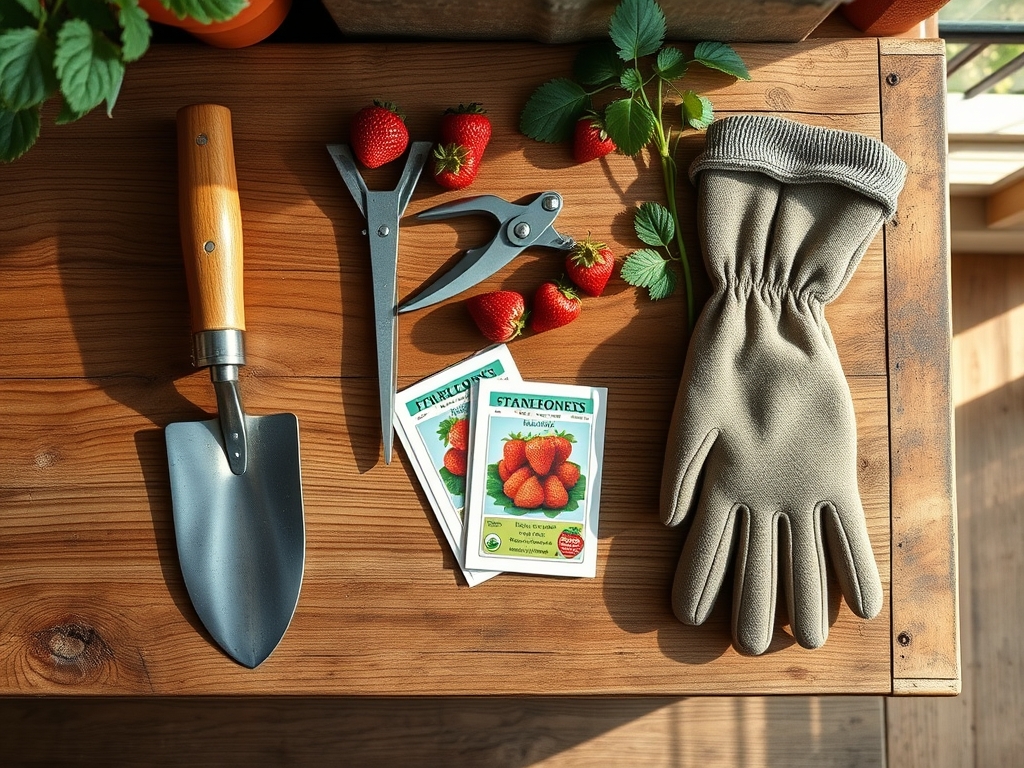
Materials:
The ideal substrate for strawberries is a sandy loam with a **Cation Exchange Capacity (CEC) between 10 and 20**. This range ensures the soil can hold onto essential nutrients without becoming waterlogged. You must target a **soil pH between 5.8 and 6.2**; anything higher than 7.0 triggers iron chlorosis because the plant cannot sequester micronutrients in alkaline conditions.
For the initial soil amendment, utilize a 10-10-10 NPK ratio at a rate of 2 pounds per 100 square feet. Incorporate well-rotted compost with a C:N (carbon to nitrogen) ratio of 30:1 to boost microbial activity. Avoid fresh manure, as the high salt index and ammonia content can desiccate the sensitive adventitious roots of new transplants. Ensure you have sulfur on hand if your pH testing indicates a need for acidification, or dolomitic lime if the soil is too acidic and requires a calcium magnesium boost.
Timing:
Timing is dictated by the USDA Hardiness Zone and the specific photoperiod requirements of your chosen variety. In Zones 5 through 8, the primary planting window opens as soon as the soil reaches a consistent 45 degrees Fahrenheit (7 degrees Celsius). This usually occurs 2 to 4 weeks before the last predicted spring frost.
The biological clock of the strawberry is governed by temperature and day length. June-bearing varieties initiate flower buds during the short days of autumn; everbearing and day-neutral types are less sensitive to photoperiod but require consistent temperatures between 60 and 80 degrees Fahrenheit for optimal fruit set. Planting too late in the spring subjects young crowns to heat stress before they establish a robust root system, leading to early senescence and poor runner production.
Phases:

Sowing and Site Preparation
Clear the area of all perennial weeds. Strawberries compete poorly with aggressive grasses. Dig the bed to a depth of 12 inches to ensure the taproots can penetrate the subsoil. If planting from seed, which is common for alpine varieties like 'Alexandria', sow indoors 8 to 10 weeks before the last frost. Use a sterile seed-starting mix and maintain a constant 65 degree Fahrenheit temperature.
Pro-Tip: Focus on the Rhizosphere. Incorporating mycorrhizal fungi (Glomus intraradices) during the prep phase increases the root surface area by up to 100 times. This symbiotic relationship enhances phosphorus uptake and improves the plant's drought tolerance by extending the reach of the root system into micro-pores the plant cannot access alone.
Transplanting
When moving dormant crowns or nursery starts into the bed, the depth of the crown is the most critical variable. The midpoint of the crown must be level with the soil surface. Burying the crown leads to rot; leaving it too high causes the roots to desiccate. Space plants 12 to 18 inches apart in rows spaced 3 feet apart to allow for runner expansion.
Pro-Tip: Manage Auxin Suppression. For June-bearing varieties, pinch off all flower buds during the first year. This redirects the plant's energy from reproductive growth (fruit) to vegetative growth (roots and runners). By suppressing the hormonal signal for fruiting, you allow the plant to build the carbohydrate reserves necessary for a massive harvest in year two.
Establishing the Bed
Once the plants are in the ground, apply a 2-inch layer of clean wheat straw or pine needles. This mulch regulates soil temperature, suppresses weed germination, and prevents soil-borne pathogens from splashing onto the foliage during rain events.
Pro-Tip: Utilize Phototropism and Spacing. Ensure runners are pinned down in a "matted row" system with at least 6 inches between each daughter plant. Proper spacing ensures that every leaf has maximum access to PAR (Photosynthetically Active Radiation). Crowded leaves shade one another, reducing the net photosynthetic rate and increasing the humidity that favors fungal pathogens.
The Clinic:
Physiological disorders often mimic infectious diseases. Accurate diagnosis requires looking at the pattern of the symptoms.
- Symptom: Interveinal chlorosis (yellowing between green veins) on new leaves.
- Solution: This indicates an Iron deficiency, often caused by high soil pH. Apply chelated iron foliar spray and check soil pH levels immediately.
- Symptom: Marginal leaf scorch and "cupping" of older leaves.
- Solution: This is a sign of Potassium deficiency. Apply a water-soluble fertilizer with a high K-value, such as 0-0-50 (Potassium Sulfate), at a rate of 0.5 pounds per 100 square feet.
- Symptom: Small, distorted new leaves with blackened tips.
- Solution: This suggests Calcium deficiency, often linked to irregular watering rather than a lack of calcium in the soil. Calcium moves via the transpiration stream; if the plant lacks consistent water, the calcium cannot reach the growing tips.
- Symptom: General yellowing of the entire plant, starting with older leaves.
- Solution: Nitrogen chlorosis. Apply a quick-release nitrogen source like blood meal or a 20-20-20 balanced fertilizer to restore chlorophyll production.
Maintenance:
Precision irrigation is the cornerstone of strawberry health. Use a soil moisture meter to ensure the root zone remains consistently moist but not saturated. Strawberries require exactly 1.5 inches of water per week delivered at the drip line. Overhead watering should be avoided to prevent leaf spot and fruit rot; drip irrigation is the professional standard.
Use a hori-hori knife for precision weeding around the crowns to avoid disturbing the shallow root system. Pruning is also essential. Use bypass pruners to remove old, reddening leaves (senescent tissue) which can harbor pathogens. In late winter, mow the foliage of June-bearers to 2 inches above the crowns to stimulate fresh spring growth.
The Yield:
Harvesting occurs when the fruit is 100 percent red from the shoulder to the tip. Strawberries do not continue to ripen or develop sugars once removed from the vine. Use your thumb and forefinger to snap the stem about half an inch above the fruit; never pull the berry, as this can damage the crown or bruise the delicate flesh.
To maintain "day-one" freshness, harvest during the coolest part of the morning before field heat builds up in the fruit. Do not wash the berries until immediately before consumption. Store them in a single layer in a ventilated container at 33 to 35 degrees Fahrenheit with 90 percent humidity. This slows the respiration rate and prevents the degradation of pectins, keeping the fruit firm.
FAQ:
How deep should I dig the bed for strawberries?
Dig the soil to a depth of 12 inches. This ensures adequate drainage and allows the primary roots to expand without hitting compacted subsoil. Incorporate organic matter throughout this depth to maintain a high Cation Exchange Capacity.
What is the best fertilizer for strawberries?
Use a balanced 10-10-10 NPK fertilizer during initial bed preparation. Once established, switch to a higher potassium blend during fruit set to improve sugar transport and fruit firmness. Avoid high nitrogen during fruiting to prevent soft, flavorless berries.
Can I plant strawberries in the same spot every year?
No. Practice a 3-year crop rotation to prevent the buildup of soil-borne pathogens like Verticillium wilt. Avoid planting where tomatoes, peppers, or potatoes grew recently, as these species share common fungal vulnerabilities.
How do I know if my soil pH is correct?
Perform a professional soil test. Strawberries require a pH between 5.8 and 6.2. If the pH is above 7.0, the plants will suffer from nutrient lockout, specifically iron and manganese, resulting in stunted growth and yellowing leaves.