8 Traditional Steps to Weave a Willow Fence
The sharp, metallic scent of wet tannins fills the air when you snap a fresh Salix rod. Beneath your boots, the soil must be saturated enough to offer minimal resistance to a spade, yet firm enough to maintain structural integrity. To master the steps to weave a willow fence, you must understand the relationship between cellular turgor and mechanical flexibility. A willow rod is at its peak utility when the sap is rising but the buds have not yet broken dormancy. This ensures the wood remains pliable without snapping under the tension of a tight weave. You are not merely building a barrier; you are engineering a living system that relies on the hydraulic pressure within the xylem to maintain its form. Success depends on the immediate contact between the cut end of the rod and the moist rhizosphere. If the rod loses too much moisture before it is seated in the earth, the vascular system collapses, and the fence becomes a collection of dead sticks rather than a self-sustaining boundary.
Materials:

The foundation of a living willow fence is the substrate. Willow (Salix spp.) thrives in a **friable loam** with a high water-holding capacity. The ideal soil pH ranges from **5.5 to 7.0**. In high-alkaline environments, iron becomes less available, leading to interveinal chlorosis. Before planting, test your soil for its Cation Exchange Capacity (CEC). A higher CEC indicates the soil can hold more essential nutrients like potassium and magnesium.
For the initial establishment phase, the soil should reflect an NPK ratio of 10-10-10. Nitrogen is essential for the rapid development of vegetative biomass, while phosphorus supports the initial root strike. Avoid high-nitrogen fertilizers in late summer, as this triggers soft growth that cannot harden off before the first frost. You will need one-year-old willow whips (rods), typically 6 to 9 feet in length, and a heavy-duty mallet for driving structural supports.
Timing:
Willow fencing is a seasonal operation dictated by the plant's biological clock. The optimal window for planting living willow is during the dormant season, typically between late November and early March. In Hardiness Zones 4 through 8, you must complete the installation after the ground thaws but before the local "last frost" date.
The transition from the dormant state to the vegetative stage is triggered by soil temperatures reaching a consistent 45 to 50 degrees Fahrenheit. If you plant too late in the spring, the plant will prioritize leaf production (transpiration) over root development, leading to rapid desiccation. By planting in the dead of winter, you allow the rod to settle and begin callusing at the base, preparing for the spring surge of auxin that drives root initiation.
Phases:

Sowing and Site Prep
Clear a trench 10 inches wide and 12 inches deep. Ensure the soil is free of perennial weed rhizomes that could compete for moisture. If your soil is heavy clay, incorporate organic matter to improve aeration. Willow roots require oxygen just as much as water; anaerobic conditions in compacted soil will lead to root rot.
Pro-Tip: Dip the basal ends of your willow rods in a willow water solution or a rooting hormone. This exploits auxin concentration, a phytohormone that migrates to the base of the cutting to stimulate the formation of adventitious roots.
Transplanting and Setting
Insert the primary upright rods (the "zale") into the ground at a depth of at least 12 inches. Space these structural pillars 10 to 12 inches apart. Use a hori-hori knife to clean the planting holes if the soil is rocky. Ensure the rods are vertical; gravity and light will dictate their future growth patterns through negative geotropism.
Pro-Tip: Angle the rods at a 45-degree slope if you are creating a diamond (fedge) pattern. This manipulation of the growth angle slows down apical dominance, encouraging the plant to sprout lateral shoots along the entire length of the stem rather than just at the tip.
Establishing the Weave
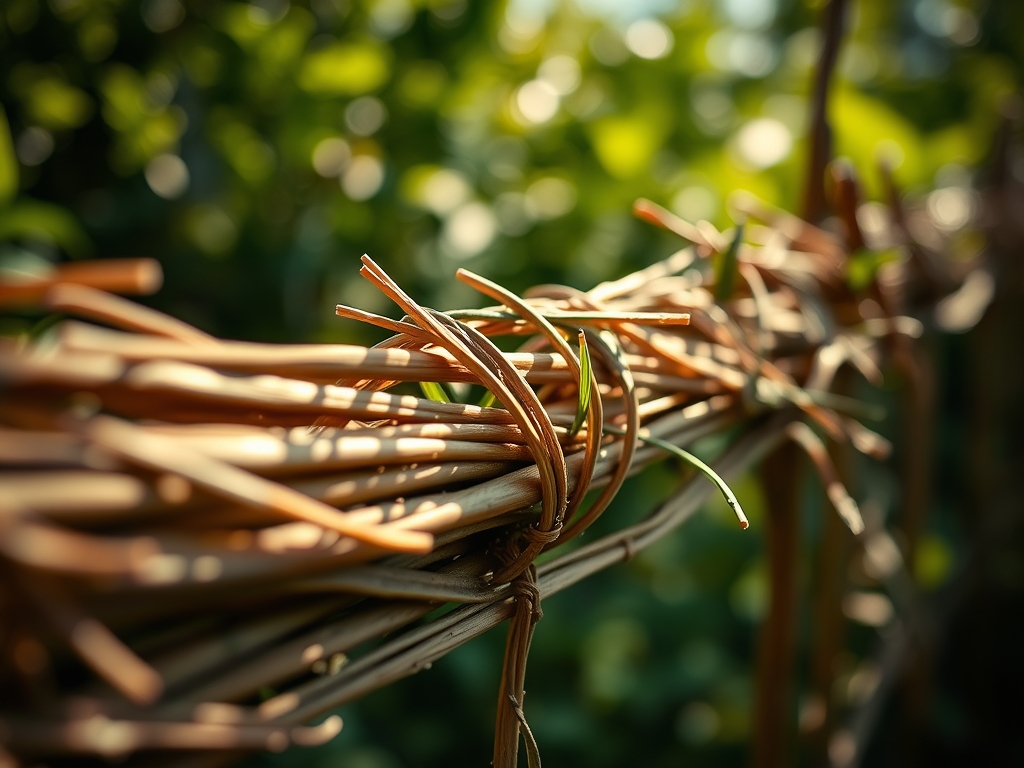
Begin the weave by taking the diagonal rods and passing them in front of and behind the uprights. Secure the intersections with biodegradable twine or flexible rubber ties. The tension should be firm but not so tight that it constricts the phloem, which transports sugars from the leaves to the roots.
Pro-Tip: At every intersection where the bark of two rods touches, you can perform a "pressure graft." By slightly scarring the bark at the contact point, the plants will eventually undergo inosculation, a natural process where the vascular cambium of two separate plants fuses into one.
The Clinic:
Monitoring the physiological health of your fence is critical during the first two growing seasons.
Symptom: Yellowing of lower leaves while veins remain green.
Solution: This is likely Nitrogen chlorosis. Apply a water-soluble fertilizer with a higher first digit in the NPK ratio, such as a 20-10-10, to the root zone.
Symptom: Wilting of terminal tips despite moist soil.
Solution: This indicates root hypoxia or poor drainage. Reduce irrigation frequency and check for soil compaction. Use a soil moisture meter to ensure the root zone is not sitting in standing water.
Symptom: Brown, brittle spots on leaves (Rust).
Solution: This is a fungal issue often caused by poor air circulation. Thin out the interior growth with bypass pruners to increase airflow and reduce humidity within the canopy.
Fix-It for Nutrient Deficiency: If growth is stunted and leaves appear purple, the plant lacks phosphorus. Apply bone meal or a high-phosphate fertilizer to the rhizosphere to support ATP production and energy transfer within the plant cells.
Maintenance:
A living willow fence is a high-metabolism structure. During the first year, provide 1.5 inches of water per week at the drip line. Use a soil moisture meter to verify that moisture is reaching a depth of 8 inches.
Pruning is mandatory to maintain the shape. In late winter, use bypass pruners to remove any "dead wood" or rods that failed to take root. If a rod has died, it can be replaced by "gap-filling" with a new dormant whip. For a formal look, trim the new lateral growth three times a summer. If you prefer a wilder aesthetic, prune only once during the dormant season to maintain the height. Always make cuts at a 45-degree angle just above a leaf node to prevent water from pooling on the cut surface, which can invite pathogens.
The Yield:
While a willow fence is primarily structural, it yields a yearly harvest of "withies" or rods. If you prune your fence annually, you can harvest the new growth for basketry or additional garden structures. Harvest these rods in January or February.
To maintain "day-one" freshness for future weaving, store harvested rods in a cool, dark place with the butt ends submerged in 2 inches of water. If the rods dry out, they must be soaked in a trough for 5 to 10 days until they regain their elasticity. You can test this by wrapping a rod around your wrist; if it bends without cracking, the cellular turgor is sufficient for weaving.
FAQ:
How deep should I plant the willow rods?
Insert rods at least 12 inches (30 cm) into the soil. This depth ensures the base reaches consistent moisture levels and provides the mechanical leverage necessary to support the weight of the fence as it grows.
What is the best willow variety for fencing?
Salix viminalis (Basket Willow) is the industry standard due to its extreme flexibility and rapid growth rates. Salix purpurea is also used for its unique color and resistance to certain physiological stressors.
Do I need to use fertilizer every year?
No. Once established, willow is highly efficient at scavenging nutrients. Only apply a 10-10-10 fertilizer if you notice signs of slow growth or leaf discoloration, typically every 2 to 3 years.
How long does a living willow fence last?
With proper maintenance and annual pruning, a living willow fence can persist for 25 to 50 years. Its lifespan is extended by the process of inosculation, where individual rods fuse into a single, massive organism.